Microschools in Phoenix
Explore microschools near you, understand how Arizona’s ESA funding works, and learn what to look for when choosing a school.
Why Phoenix Families Are Exploring Microschools
More families across Phoenix are taking a closer look at microschools as they search for learning environments that better fit their child.
Here’s what draws many families to this model:
- Smaller learning communities
10–50 students, more individual attention - More personalized learning
Students move at their own pace - Stronger relationships with educators
More time, deeper support - Flexible learning models
Hybrid schedules and customized pathways
Top Microschools in Phoenix
Explore top Phoenix microschools and connect directly with those near you.
Inspire Academy
Inspire Academy is a progressive microschool in Greater Phoenix for grades K-12. We embrace diversity and support all learners.
Sonoran Learning Collective
In today’s digital world, our mission is to teach students how to think deeply, not just seek quick answers or rely on algorithms.
KaiPod Learning Scottsdale
KaiPod learning pods provide flexible in-person learning for 3rd-12th grade. KaiPod Scottsdale is accredited by WASC and MSA.
KaiPod Learning Gilbert
KaiPod learning pods provide flexible in-person learning for 3rd-12th grade. KaiPod Gilbert is accredited by WASC and MSA.
Grace Place Learning Lab
Grace Place Learning Lab is a student centered, faith-based learning environment, designed for grades K-5 in Tempe, Arizona.
Moreana Boys Academy
Moreana Boys Academy provides an alternative education for upper elementary, middle, & high school boys in the East Valley.
Faithscape Learning
Faithscape is a learning center that caters to grades K-5. Reach out if you’re looking for personalized learning in Casa Grande.
How Phoenix Families Pay for Microschools
What Learning Looks Like Day to Day
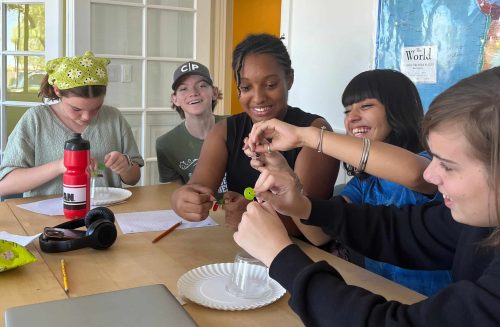
- Small group instruction — more targeted support and attention
- Self-paced academics — move ahead or take more time as needed
- Hands-on learning — projects, collaboration, real-world exploration
- Supportive community — strong relationships and student confidence
Is a Microschool Right for Your Child?
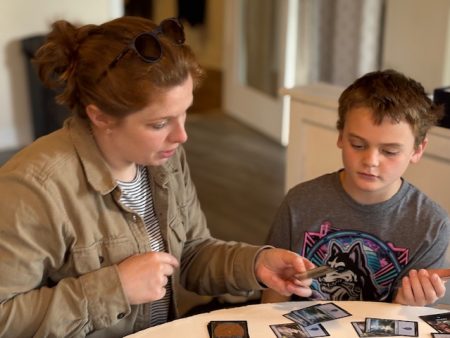
- Thrive in smaller environments — fewer students, more connection
- Need individualized support — learning tailored to their pace
- Prefer flexibility — not one-size-fits-all instruction
- Engage with hands-on learning — active, applied experiences
- Their child feels lost in a large classroom
- Traditional school isn’t meeting their needs
- They want a more personalized experience
Common Questions About Microschools in Phoenix
How are microschools different from traditional schools?
Microschools are smaller, more personalized learning environments than traditional schools.
Most serve 10–50 students and focus on flexible, student-centered learning rather than a one-size-fits-all model.
Students often learn in small groups, move at their own pace, and engage in hands-on or project-based work.
What grades do microschools serve?
Grades offered varies by school. Some microschools serve elementary, others middle or high school, and many serve mixed-age groups.
What does a typical day look like in a microschool?
A typical microschool day includes a mix of small group instruction, independent work, and hands-on learning.
Students often move between guided lessons, self-paced academics, and collaborative or project-based activities.
Schedules vary by school, so it’s helpful to ask how the day is structured.
Do microschools follow a specific curriculum?
Microschools have flexibility in how they design learning. Many combine structured academics with project-based and individualized instruction.
Some follow a defined curriculum, while others take a more flexible approach—working with families to support a student’s existing homeschool or online program, or creating a customized learning plan.
It’s helpful to ask each school how they approach curriculum and how much flexibility families have.
Are microschools accredited?
Some microschools pursue accreditation or operate within accredited networks, while others use alternative documentation. Ask each school how they handle transcripts and transitions.
Still have questions?
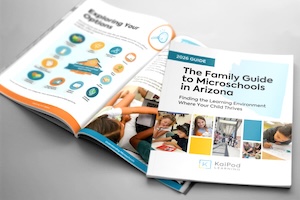
Start with the free Family Guide to Microschools in Arizona for a deeper look at microschools, ESA funding, and how to choose the right fit for your child.
How KaiPod Supports Microschools in Phoenix
At KaiPod, we’re committed to helping microschools succeed. While each microschool is independently operated by its founders, our expert training and ongoing support help ensure that these schools meet high standards of quality and success.
Our resources offer a strong foundation for passionate educators to bring their vision to life while providing parents with the confidence that their child’s education is in great hands. From local and state regulations to operational support, we work behind the scenes to make sure that each microschool is compliant, well-managed, and equipped to provide a nurturing environment for students.
Whether it’s providing ongoing professional development, offering curriculum discounts, or connecting microschools with a nationwide network of educators, KaiPod is here to support both the schools and families in the Phoenix community.