One of the most common questions families have is whether a microschool is affordable. In Texas, families have a few ways to help cover the cost, and many programs offer more flexibility than traditional private school tuition Texas Education Freedom Accounts (TEFA)
Texas offers a state-funded account for eligible families that can help pay for approved education expenses, including tuition at participating microschools.
The TEFA application window for the 2026-27 school year closed in March, but families should plan to apply for the following school year when the next window opens.
Not all microschools accept TEFA, so it’s important to check directly with each school before enrolling. Learn more about eligibility, timelines, and updates: https://educationfreedom.texas.gov.
What Learning Looks Like Day to Day
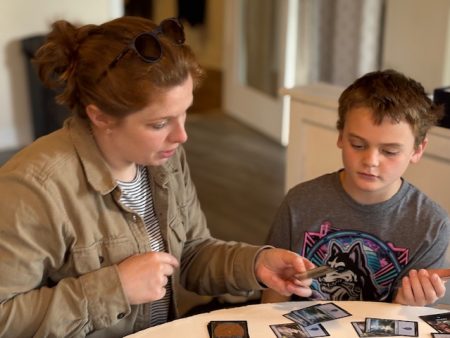
Small group instruction — more targeted support and attention
Self-paced academics — move ahead or take more time as needed
Supportive community — strong relationships and student confidence
Is a Microschool Right for Your Child?
Microschools can be a strong fit for students who:
Thrive in smaller environments — fewer students, more connection
Need individualized support — learning tailored to their pace
Prefer flexibility — not one-size-fits-all instruction
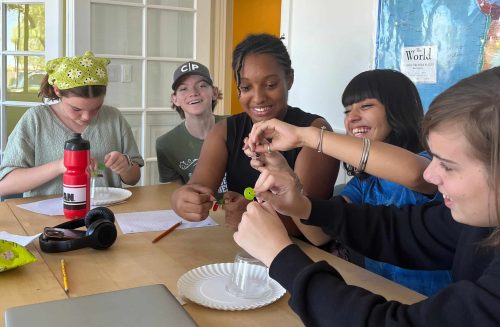
Engage with hands-on learning — active, applied experiences
Families often start exploring microschools when:
Their child feels lost in a large classroom
Traditional school isn’t meeting their needs
They want a more personalized experience
Common Questions About Microschools in Houston
How are microschools different from traditional schools?
Microschools are small, personalized learning environments. They usually serve fewer students, use flexible teaching methods, and focus more on individual progress than a one-size-fits-all model.
What grades do microschools serve?
It depends on the school. Some serve only elementary grades, while others support middle school, high school, or mixed-age groups.
What does a typical day look like in a microschool?
Most days include small-group instruction, independent work, and hands-on learning. The exact structure varies by school.
Do microschools follow a specific curriculum?
Some do, and some don’t. Many use a mix of structured academics, project-based learning, and personalized plans.
Are microschools accredited?
Some are accredited or part of accredited networks, while others are not. It’s best to ask how the school handles transcripts, records, and student transitions.
Are all Texas microschools eligible for TEFA funding?
Not all microschools are eligible to receive TEFA funds. Before enrolling, it’s important to confirm how funding works for the specific microschool you are considering. Be sure to ask if the school is an approved TEFA provider and, if so, whether TEFA funds be used for tuition.
Still have questions?
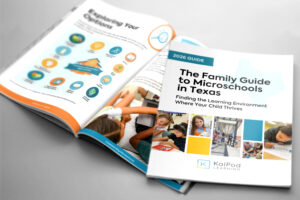
Start with the free Family Guide to Microschools in Texas for a deeper look at microschools, TEFA funding, and how to choose the right fit for your child.