Microschools in Austin
Why Austin Families Are Exploring Microschools
Across Austin and nearby communities, more families are looking for something different—something that feels more personal, more flexible, and more connected.
Microschools are small, in-person learning environments—typically serving 5–25 students—that offer a more individualized and relationship-driven approach to learning.
For many families, they provide a school experience where students are truly known and supported. Here’s why:
- Smaller learning communities
Fewer students means more individual attention - More personalized learning
Students move at their own pace - Stronger relationships with educators
More time, deeper support - Flexible learning models
Hybrid schedules and customized pathways
Top Microschools in Austin
Explore top Austin microschools and connect directly with those near you.

Godfrey Learning Academy
San Marcos microschool, where students grow through individualized instruction, strong relationships, and confidence-building.

Unity Sanctuary
Microschool offering a nurturing, holistic environment focused on personal growth, purpose, and meaningful learning.
Athena Micro-Academy
Relationship-centered microschool for self-directed students offering personalized, self-paced learning in a small environment.

Elite Flexi School
Flexible microschool offering personalized, hybrid learning designed to fit each student’s schedule and learning needs.
How Austin Families Pay for Microschools
One of the most common questions families have is whether a microschool is affordable. In Texas, families have a few ways to help cover the cost, and many programs offer more flexibility than traditional private school tuition
Texas Education Freedom Accounts (TEFA)
Texas offers a state-funded account for eligible families that can help pay for approved education expenses, including tuition at participating microschools.
The TEFA application window for the 2026-27 school year closed in March, but families should plan to apply for the following school year when the next window opens.
Not all microschools accept TEFA, so it’s important to check directly with each school before enrolling. Learn more about eligibility, timelines, and updates: https://educationfreedom.texas.gov.
Private tuition and flexible payment plans
Many microschools offer flexible tuition structures, part-time options, or hybrid models to help families manage costs.
Homeschool and hybrid learning options
Some families combine microschools with homeschooling or part-time learning, depending on the school’s model.
What Learning Looks Like Day to Day
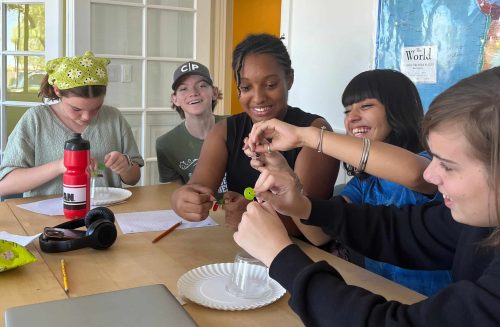
- Small group instruction — more targeted support and attention
- Self-paced academics — move ahead or take more time as needed
- Hands-on learning — projects, collaboration, real-world exploration
- Supportive community — strong relationships and student confidence
Is a Microschool Right for Your Child?
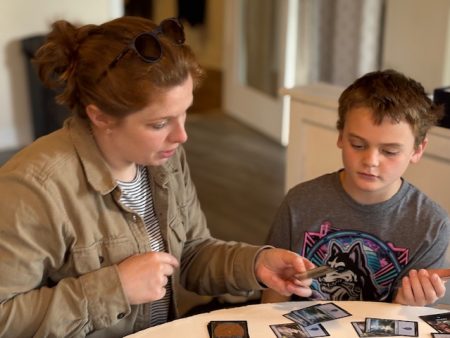
Microschools can be a strong fit for students who:
- Thrive in smaller environments — fewer students, more connection
- Need individualized support — learning tailored to their pace
- Prefer flexibility — not one-size-fits-all instruction
- Engage with hands-on learning — active, applied experiences
Families often start exploring microschools when:
- Their child feels lost in a large classroom
- Traditional school isn’t meeting their needs
- They want a more personalized experience
Common Questions About Microschools in Austin
How are microschools different from traditional schools?
Microschools are small, personalized learning environments. They usually serve fewer students, use flexible teaching methods, and focus more on individual progress than a one-size-fits-all model.
What grades do microschools serve?
It depends on the school. Some serve only elementary grades, while others support middle school, high school, or mixed-age groups.
What does a typical day look like in a microschool?
Most days include small-group instruction, independent work, and hands-on learning. The exact structure varies by school.
Do microschools follow a specific curriculum?
Some do, and some don’t. Many use a mix of structured academics, project-based learning, and personalized plans.
Are microschools accredited?
Some are accredited or part of accredited networks, while others are not. It’s best to ask how the school handles transcripts, records, and student transitions.
Are all Texas microschools eligible for TEFA funding?
Not all microschools are eligible to receive TEFA funds. Before enrolling, it’s important to confirm how funding works for the specific microschool you are considering. Be sure to ask if the school is an approved TEFA provider and, if so, whether TEFA funds be used for tuition.
Still have questions?
Start with the free Family Guide to Microschools in Texas for a deeper look at microschools, TEFA funding, and how to choose the right fit for your child.