Table of Contents
- What Parents Usually Mean When They Ask About Socialization
- What Socialization Actually Involves
- What Social Life Looks Like Inside a Microschool
- How the Social Environment Differs from Traditional School
- What Families in KaiPod’s Network Report
- Questions to Ask When Evaluating a Specific Microschool
- Thinking Through Your Own Decision
- You May Be Interested In
What Parents Usually Mean When They Ask About Socialization
When parents ask whether microschool students get enough socialization, they’re usually trying to understand what day-to-day social life actually looks like.
Questions often include:
- Will my child have opportunities to make friends?
- Will there be enough children to interact with?
- How do students build relationships in a smaller setting?
- What happens if my child doesn’t connect with the other students?
- Will they have opportunities to interact with children outside the microschool?
These are important questions, and the answers often depend less on the size of the school and more on how relationships and community are intentionally built into the learning experience.
What Socialization Actually Involves
A larger peer pool tends to feel like an obvious advantage. More children around means more potential friends, more variety, more social practice.
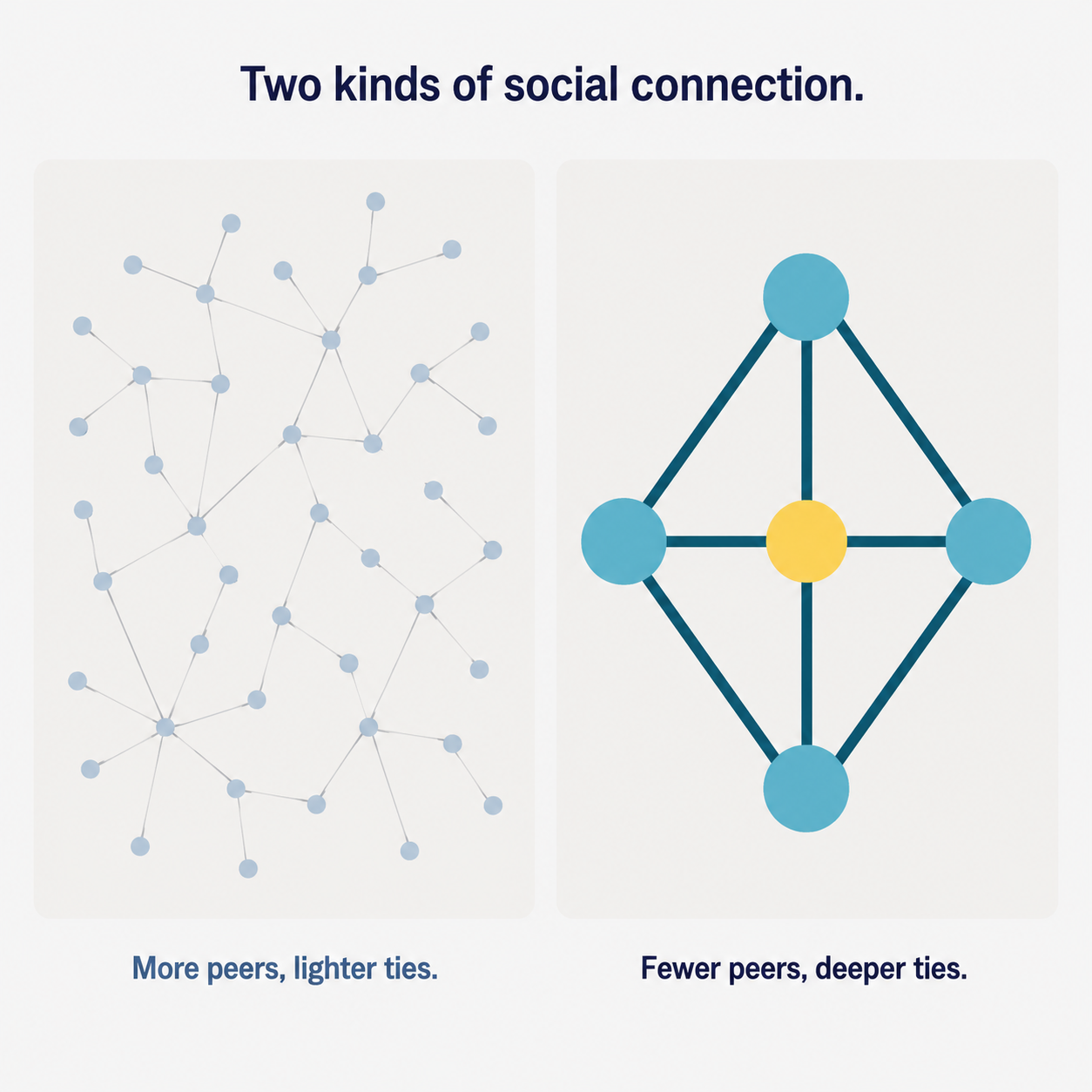
Developmental psychology research has added some nuance to that picture. Research by psychologist Willard Hartup suggests that when it comes to children’s social development, the quality of friendships often matters as much as the size of a child’s peer group. Meaningful relationships and regular opportunities to interact with others are what help social skills develop over time.
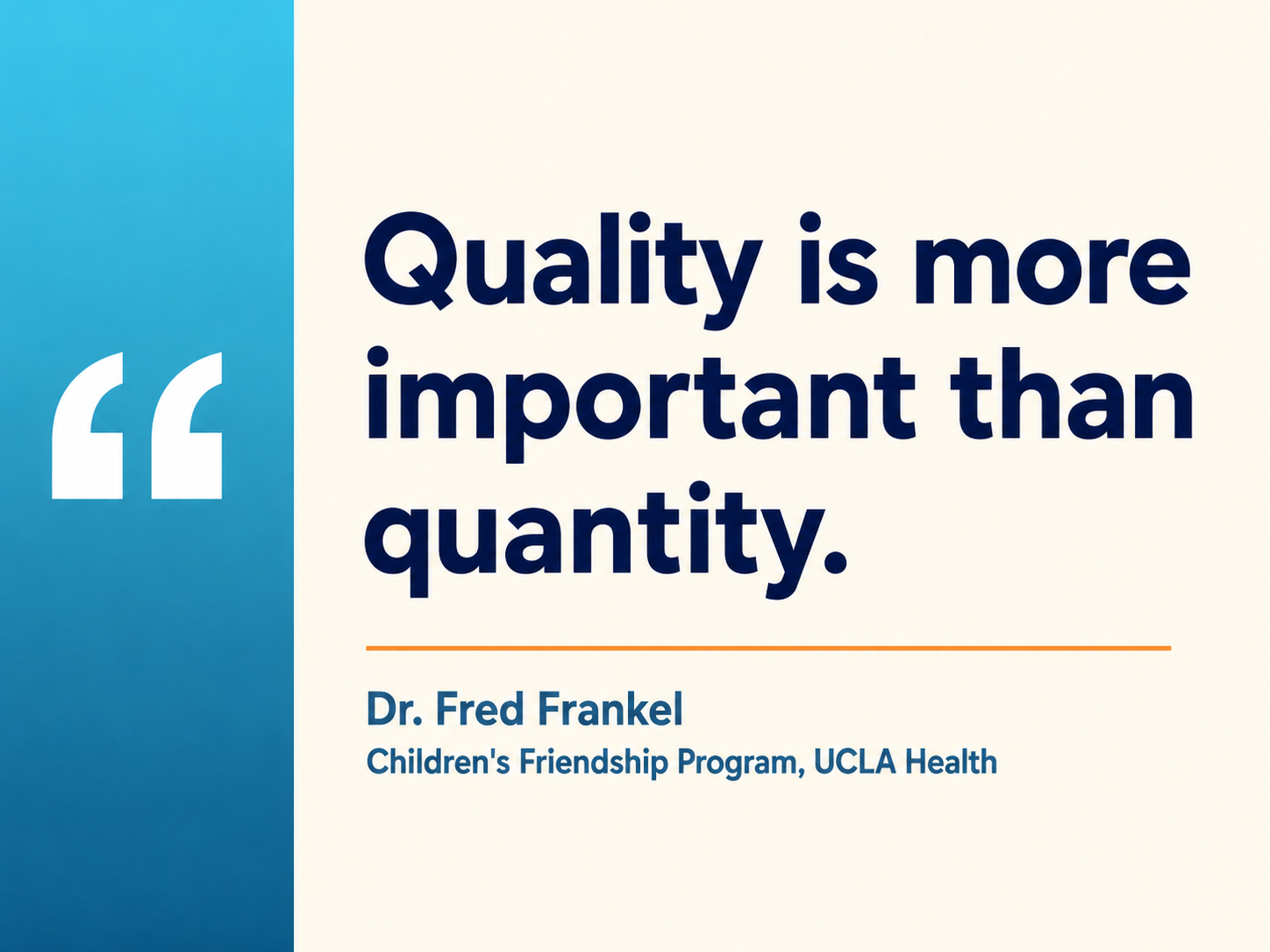
Dr. Fred Frankel, who leads the Children’s Friendship Program at UCLA Health, puts it plainly: “Quality is more important than quantity.”
The CASEL framework, the field’s leading standard for social-emotional learning, defines relationship skills as the ability to communicate clearly, listen actively, cooperate, and negotiate conflict constructively. Those skills develop through genuine practice in real relationships, with adult support. That can happen in a group of ten just as it can in a group of thirty.
However, peer group size does make some difference. A smaller pool means fewer chances to find a same-interest friend and less exposure to a wide variety of personality types. But the depth and quality of a child’s social development isn’t primarily shaped by how many children are in the building.
What Social Life Looks Like Inside a Microschool
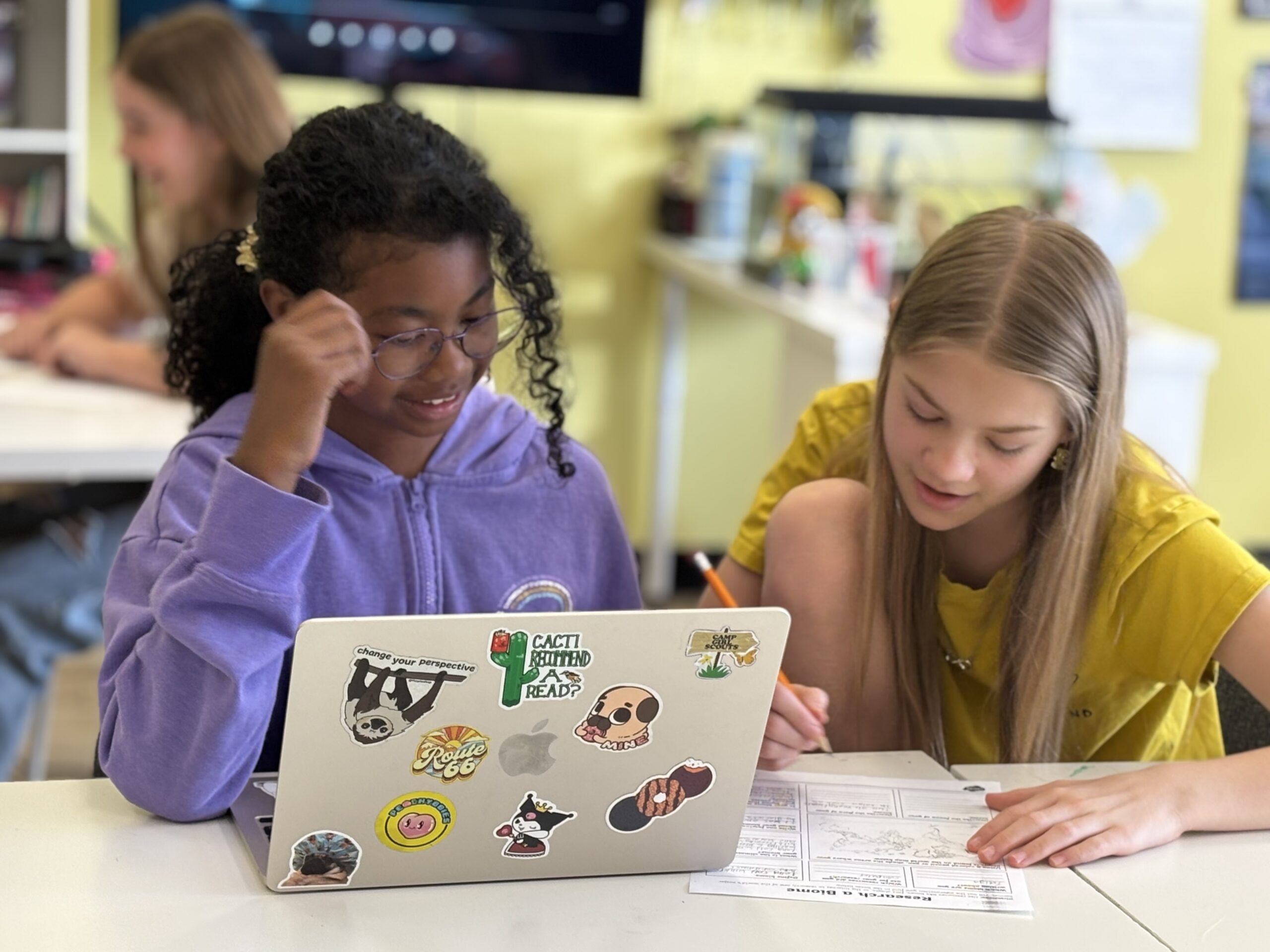
Socialization in a microschool happens through the structure of the day itself. Several features are common across microschools in KaiPod’s network:
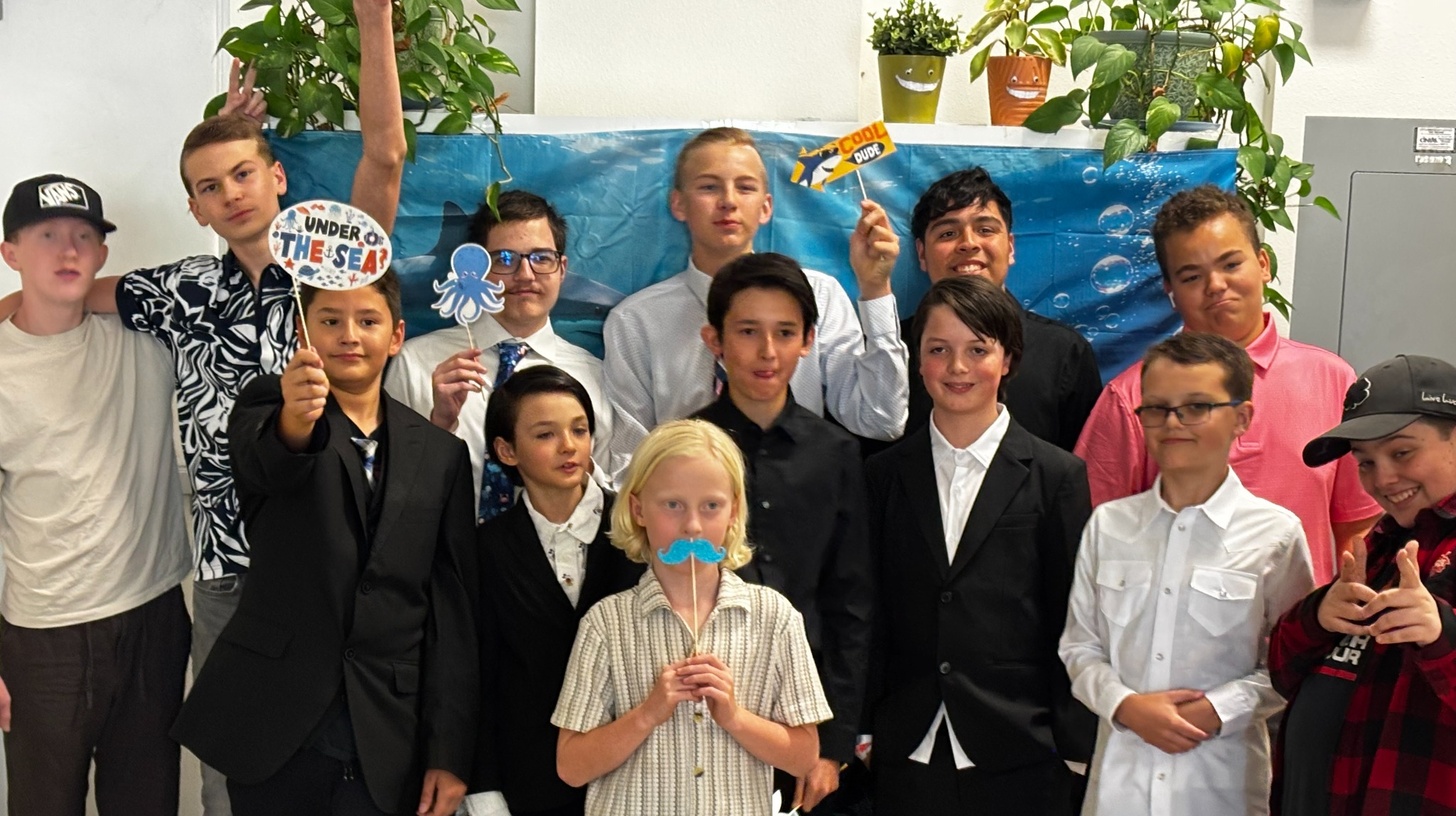
Mixed-age learning groups. Children of different ages work alongside each other regularly. Older students develop leadership and perspective-taking skills. Younger students learn from older peers who are close enough in age to feel like approachable role models. Research on mixed-age learning has found a positive effect on children’s social skills.
Project-based collaboration. Group projects are a primary driver of peer interaction. Working toward a shared outcome requires communication, negotiation, and often conflict resolution, all with real stakes.
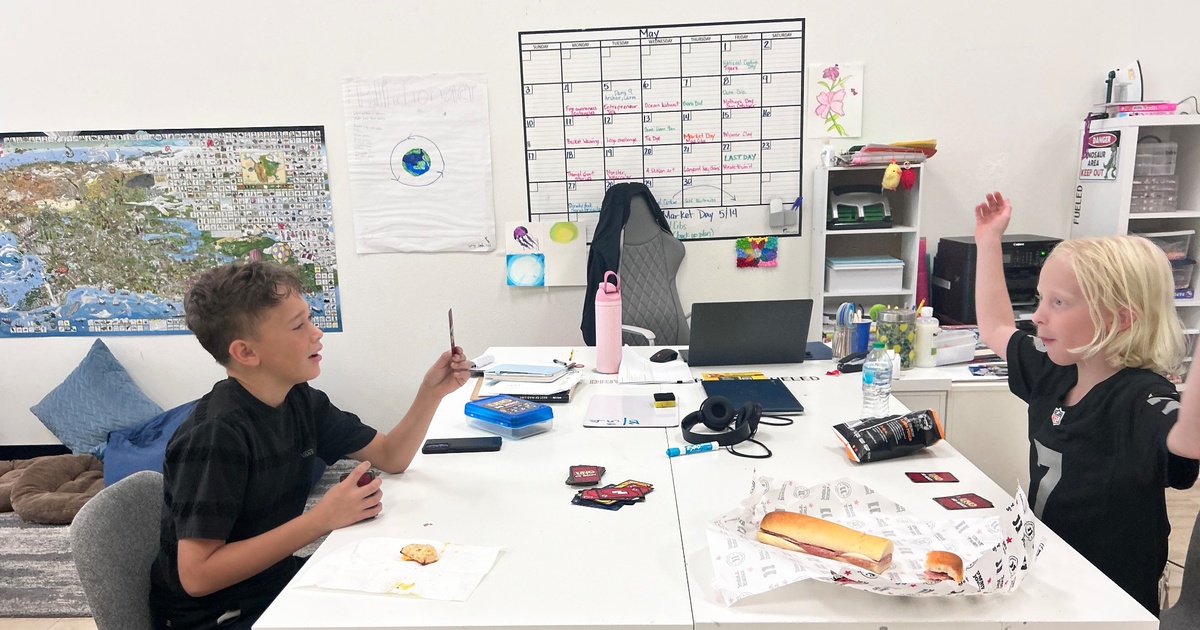
Small-group discussions. Daily conversation in a small group is a different experience from whole-class instruction. Children get more speaking time, more direct engagement with peers’ ideas, and more practice listening and responding.
Conflict resolution with adult guidance. In a microschool, the Learning Coach actively guides children through the process of working out disagreements. That’s a meaningfully different role from supervising a playground. Over time, children internalize those patterns.
Flexible groupings. Children move between different learning groups, project teams, and discussion circles throughout the week. The social configuration changes, which means relationships develop across multiple contexts rather than being fixed to a single classroom arrangement.
For a fuller picture of how a typical microschool day is structured, KaiPod’s overview covers the daily experience in more detail.
How the Social Environment Differs from Traditional School
Both models shape children’s social life in distinct ways, each with real tradeoffs.
| Traditional School | Microschool | |
| Group size | Larger, same-age groups | Smaller, mixed-age groups |
| Adult role in social interactions | More supervisory; less individualized | More guided; lower adult-to-child ratios |
| Social time | Often unstructured (recess, lunch) | More intentional community-building built into the day |
| Peer exposure | Broad, many peers across the day | Fewer peers, but typically more consistent and deeper relationships |
Children who thrive on variety and a wide social landscape may find a microschool setting limiting. Children who need depth and consistency to open up socially often do well in one. The fit question matters more than any general comparison between the two models.
What Families in KaiPod’s Network Report
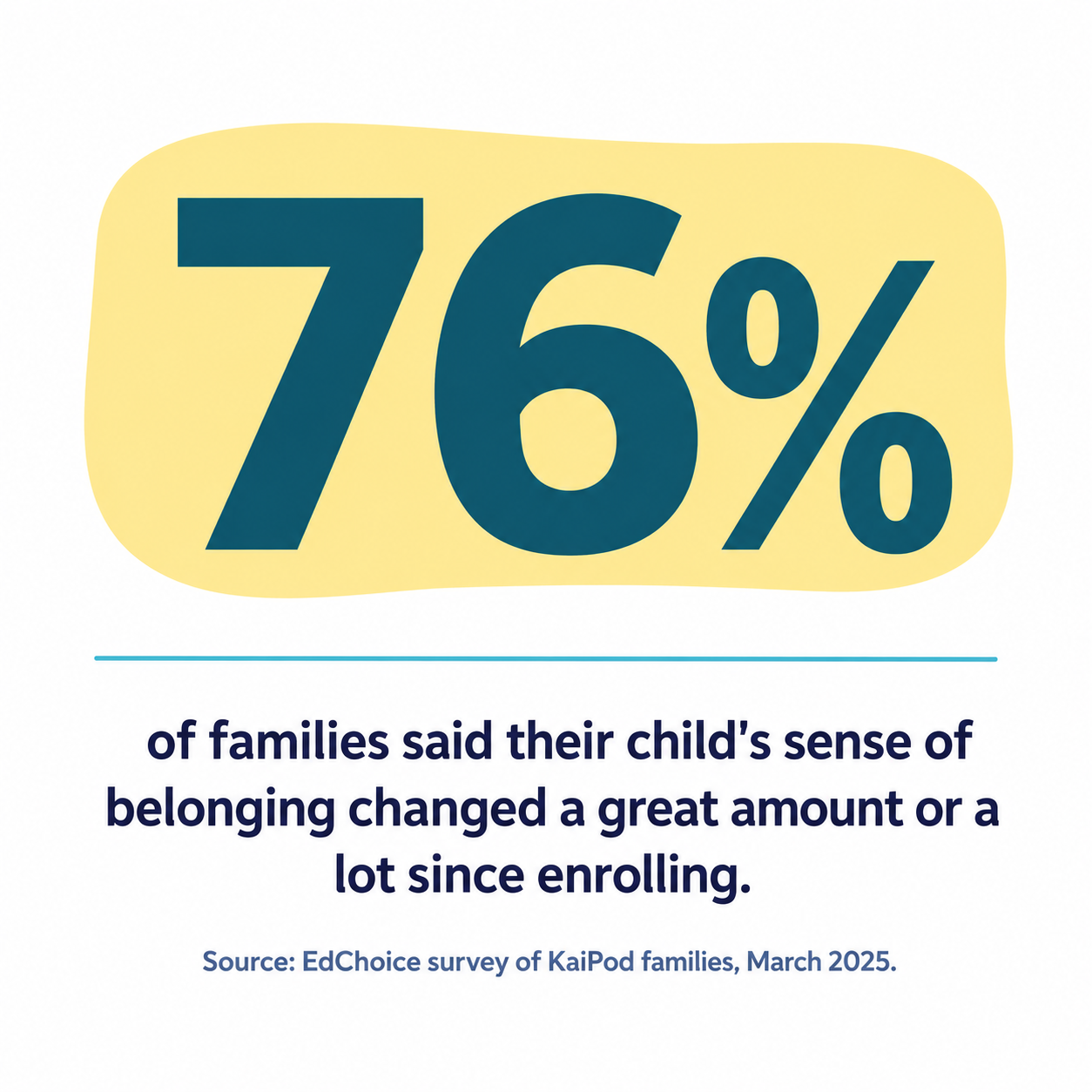
Research can help us understand how children build friendships and develop social skills. But it’s also helpful to look at what families experience in practice. In a March 2025 survey conducted by EdChoice, families enrolled in KaiPod-network microschools reported the following:
- 92% of families reported consistent opportunities for socialization
- 67% said their child’s social skills had changed “a great amount” or “a lot” since enrolling
- 76% said the same about their child’s sense of belonging
- 94% of families reported that their child feels secure at their microschool
While these findings reflect the experiences of families enrolled in KaiPod-network microschools, they offer a helpful snapshot of how many parents perceive their children’s social connections, sense of belonging, and overall experience in a smaller learning environment.
As with any survey, it’s important to note that these responses come from families who chose and remain enrolled in a microschool. Their experiences may not reflect every family’s experience or every microschool setting.
The Honest Tradeoffs
A microschool does not expose a child to as many peers in a day, and that has real implications.
With a smaller peer pool, there’s less variety in personality types, interests, and backgrounds. A child looking for someone who shares a very specific passion may not find that person in a group of ten. In a school of 400, they probably would.
Small-group dynamics are also more sensitive to disruption. When one child is struggling behaviorally, the effect on a group of eight is proportionally larger than in a class of thirty. A well-run microschool actively manages this, but it’s a real feature of the model.
The smaller peer group is one of the defining characteristics of a microschool. For some families, that’s exactly the appeal. For others, it may feel limiting. Understanding what helps your child feel connected and engaged socially is often more important than comparing school sizes alone.
Like many aspects of education, socialization is ultimately a question of fit. Some children flourish in a large, bustling environment with hundreds of peers. Others feel more comfortable, confident, and connected in a smaller community where they’re known well by both educators and classmates.
Questions to Ask When Evaluating a Specific Microschool
The social fit question really comes down to a specific school and a specific child. A few questions worth bringing to any microschool visit:
- How are children grouped for different activities throughout the day?
- What does the teacher do when two children have a disagreement?
- Are there regular opportunities for children to connect with peers outside their immediate group, through community events, field trips, or extracurriculars?
- How have children with a similar temperament adjusted socially?
- What happens if a child outgrows their current peer group?
It’s also worth knowing that RAND’s 2025 review of the microschool sector found that microschools frequently serve children whose social, emotional, or behavioral needs weren’t being met in traditional environments. That context shapes the community in ways that can be a strong fit for some children and a mismatch for others.
To understand how intentional social-emotional development is built into the microschool model, KaiPod’s article on social-emotional learning inside microschools covers that in more detail.
Thinking Through Your Own Decision
Socialization in a microschool is real, structured, and often intentionally designed. It’s also smaller in scale, deeper in some ways, and narrower in others.
Whether that’s the right environment for a particular child comes down to the child and the school.
KaiPod Learning’s Family Guide to Microschools is designed around exactly this kind of evaluation. It covers what to look for in a microschool, questions to bring to a visit, and how to think through whether this model is the right fit for your family. If you’re in the middle of this decision, it’s a practical next step.
If you’re ready to look at specific options, you can find a microschool near you to see what’s available in your area.
You May Be Interested In
- Microschool Pros and Cons
- Microschooling vs. Homeschooling: 10 Key Differences
- Reasons to Switch Schools
- What Is a Microschool?