
If you’re weighing whether a microschool might be a better fit than your child’s public school, you probably have practical questions about what would actually change day to day, and whether a smaller, more personal setting can give your child what their current school hasn’t. At KaiPod Learning, we work with 150+ microschool founders across 30+ states, and these are the questions families bring to us most often when they’re exploring a change.
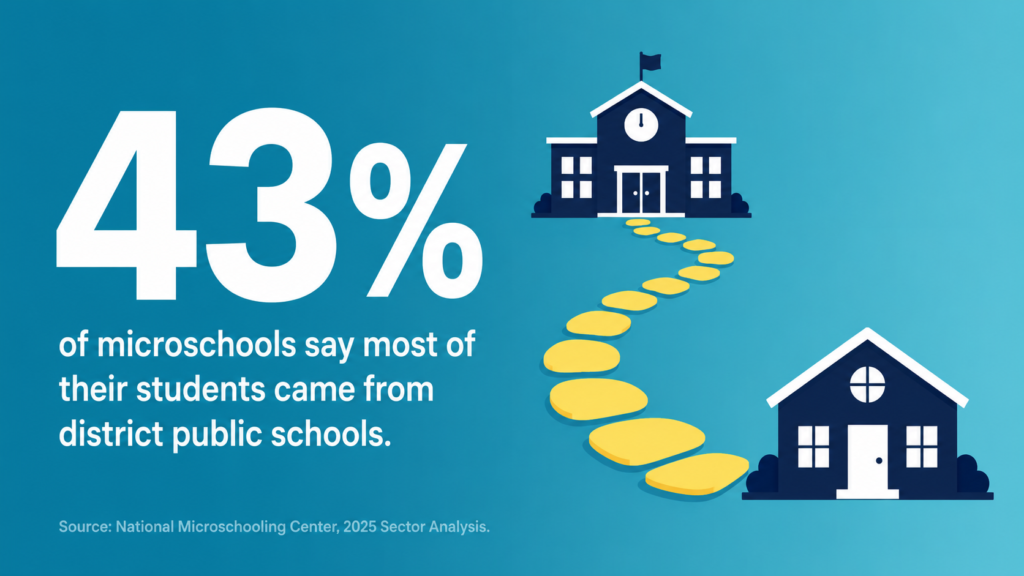
Before we go further, it’s worth noting that microschools don’t all look the same. A microschool can operate as a private school, a homeschool-based learning center, or a network-affiliated school, and the daily experience varies from one to the next. So treat the descriptions below as the common patterns we see, then ask the specific school you’re considering how it does things.
In this article:
What changes when you move from public school to a microschool
Most families notice three shifts right away, and together they explain why the day feels different for a child coming from a larger public school.
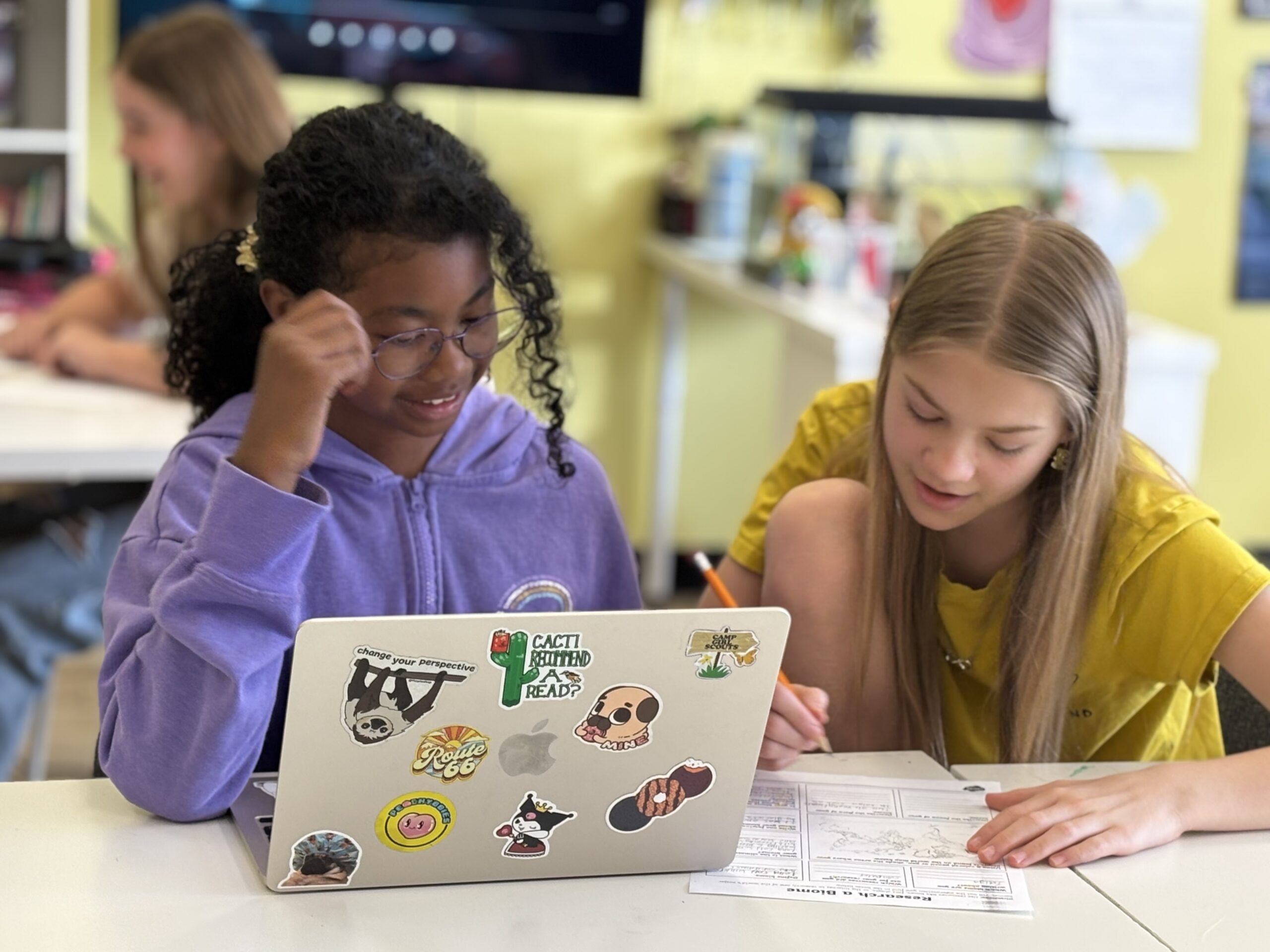
The first is group size. Microschools are generally small, often around 10 to 15 students. In the microschools we work with, that size lets educators get to know each student more deeply, including their strengths, the subjects they find harder, and how they tend to work. Nationally, microschools serve an estimated 1 to 2 million students, and small group size is the through-line across nearly all of them.
The second is more personalized learning. Students may not all work on the same lesson at the same pace. Learning is often adjusted to where a child is ready, with more room to master a topic before moving on rather than following a fixed calendar. For a child who was waiting for the class to catch up, or working hard to keep up, this is usually the most noticeable change.
The third is a different daily structure. Schedules and routines tend to be more flexible, with project-based learning and more time for discussion and collaboration in a small group. You can read more about how microschools work if you want a fuller picture of a typical day.
Common questions families have before making the switch
Underneath the logistics, most families are carrying a few quieter questions. Is this a legitimate option? Will my child be taken seriously later? Can we change course if it doesn’t work out? Here are honest answers to the ones that come up most.
Will my child have enough socialization?
Smaller doesn’t mean isolated. Mixed-age grouping is common in microschools, so students interact across ages rather than only within a single grade. Many microschools also build in enrichment such as field trips, clubs, sports, and local activities, which widens a child’s social world beyond the classroom. Families in our network often tell us their children form closer friendships in a microschool, in part because a smaller group means students get to know each other more personally. If socialization is a top concern, ask the school you’re considering how it builds friendships, handles conflict, and creates time for students to connect.
What about grades?
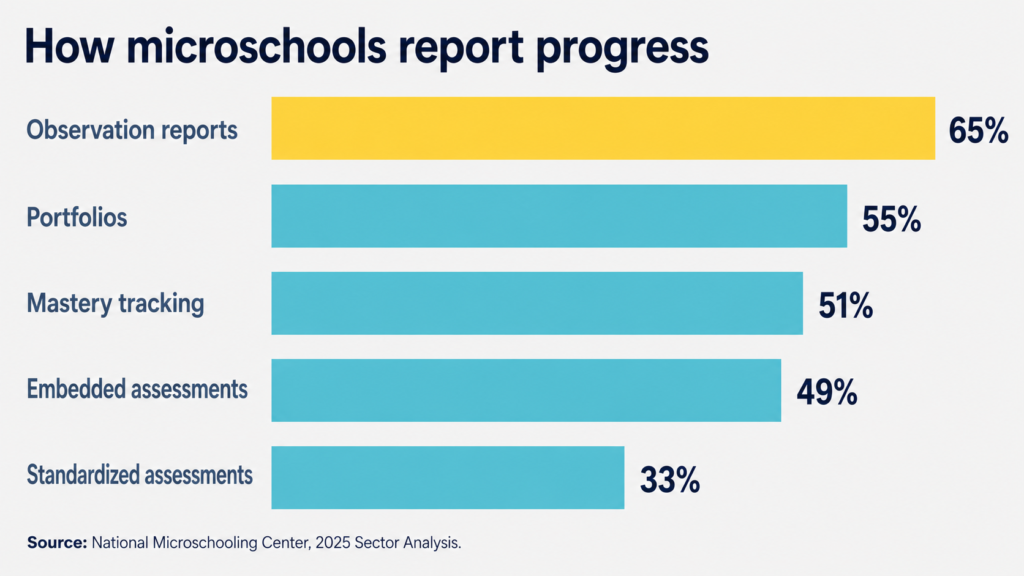
Practices vary from school to school. Some microschools use traditional letter grades, some use narrative feedback, some use mastery-based assessment, and some use portfolios or demonstrations of learning. Students generally don’t take the same standardized tests they would in a public school. In our experience, families often end up with more detailed information about their child’s progress than a traditional report card provides, just in a different format.
How is student progress measured?
A microschool may start by giving your child a benchmark assessment, such as NWEA’s MAP Growth, to establish where they stand in math and reading. From there, many microschools track progress through a mix of portfolio reviews, projects, presentations, mastery tracking, and individual learning goals set with your child. The specifics differ by school, so we encourage you to ask exactly which assessments a school uses and how it reports results back to you.
Are microschools accredited?
Some are, and many aren’t. Accreditation is a formal review in which an outside organization evaluates whether a school meets certain standards. Many microschools don’t pursue traditional accreditation, often because the model is new, the process takes time and money, and accreditation frameworks were built for larger, more traditional schools. That choice isn’t a quality signal in either direction. Some microschools do pursue it, and some operate within a network that offers a pathway to accreditation.
How much accreditation matters depends a lot on your child’s situation:
| When accreditation may matter more | When accreditation may matter less |
| Your child is in middle or high school and will need transcripts | Your child is younger |
| You anticipate moving between states or school systems | You are prioritizing fit, relationships, and the daily learning experience |
| A specific ESA or public funding program requires it | The school provides clear documentation of learning progress |
Either way, what matters most is whether learning is well documented and whether the school can support your child’s next steps. For the full picture, see our article on whether microschools are accredited.
Will colleges take a microschool seriously?
This question comes up most with middle and high school families, and it’s a reasonable one to ask. Students from non-traditional settings, including homeschooling and microschools, are admitted to colleges. Admissions offices routinely review more than a standard transcript. They look at coursework, course descriptions, recommendations, portfolios, and a student’s achievements. Many colleges already publish clear processes for applicants from non-traditional backgrounds. The practical takeaway is to ask a microschool how it handles transcripts, course descriptions, and college counseling, especially during the high school years.
Can my child transfer back to public school later?
Generally, yes. Most districts have a process for placing transfer students regardless of where they were previously enrolled, and returning to public school is usually possible. The part that takes more attention is grade placement and, in the upper grades, high school credit, both of which can depend on your district and may rely on records or assessments.
A few questions make a future transition smoother. Ask any microschool you’re considering:
- How do you document learning, and what records do families receive?
- Do you use benchmark assessments like MAP Growth that public schools recognize for grade-level placement?
- How do you handle transcripts for older students who may need them for high school credit or college applications?
If you’re weighing the broader decision to move schools, our roadmap for families on switching schools walks through it in more detail.
Will my child fall behind academically?
A less traditional environment doesn’t mean less rigor. A strong microschool still sets clear learning goals and holds students accountable for meeting them. Many families come to a microschool precisely because their child’s needs weren’t being met in a larger setting, and the smaller environment is what helps them get back on track. When assessing rigor, you’ll want to look for a real curriculum, clear expectations, meaningful feedback, and solid documentation of progress.
Questions to ask a microschool before enrolling
Because microschools differ so much, the most useful thing you can do is ask each school directly how it operates. A short list to bring to a tour or first conversation:
- What does a typical day look like?
- How do you measure student progress?
- How do students socialize and build friendships?
- Do you issue grades or transcripts?
- Are you accredited, and if not, how do you document learning?
- How do you support students with different learning needs?
Clear, specific answers tell you more about a school than any single label does. A microschool is one of several options families consider when they want a more personal setting, and whether it’s the right fit depends on what you’re looking for. If you want to see what’s available near you, you can find a microschool on our map.
Take the next step with confidence
Choosing a school is a significant decision, and you don’t have to make it without good information. The 2026 Family Guide to Microschools includes tools, checklists, and worksheets to help you evaluate schools, compare your options, and plan a smooth transition for your child.