If you’ve started looking at options beyond your child’s current school, you’ve probably run into the term “private school” plenty of times. But you may be seeing “microschool” for the first time. For many families, one term is familiar and the other is brand new.
So it’s worth getting clear on what each one actually means. “Private school” is a funding and enrollment category. It tells you how a school is recognized, not what it’s like day to day. “Microschool” is a model, defined by how small the group is and how learning is structured.
Below, we compare the two on size, class structure, pace, schedule, teaching, and cost, so you can think through which setting suits your child. At KaiPod Learning, we support the largest network of microschools in the country, with 150+ founders across 30+ states, so we see every day what microschools actually look like in practice.
We’re not here to argue that one model beats the other. Both can serve children well, in different ways. The aim is to help you ask the right questions about your own child.
Here’s what we’ll cover:
- What families usually mean by "private school"
- What a microschool is
- How microschools and private schools compare
- Size and class structure
- Learning pace
- Schedule and flexibility
- Teachers and relationships
- What each model costs
- Questions to ask yourself about your child
- Finding a microschool near you
- You May Also Be Interested In
What families usually mean by “private school”
For most families, “private school” calls to mind a fairly consistent picture: a dedicated campus, structured grade levels, credentialed teachers, a set school day and calendar, a formal curriculum, and tuition.
Private schools vary in size, from small religious schools to large independent academies. Across that range, class sizes typically fall in the mid-teens, around 14 to 16 students per class according to federal data.
Whatever the size, the experience is generally modeled on what school has looked like for a long time. Children are grouped by grade and move through a standard sequence together, with progress reported through familiar report cards and letter grades.
The main appeal of a traditional private school is predictability. A family usually knows what the year will look like, how their child will be graded, and what the path to the next grade or school involves.
What a microschool is
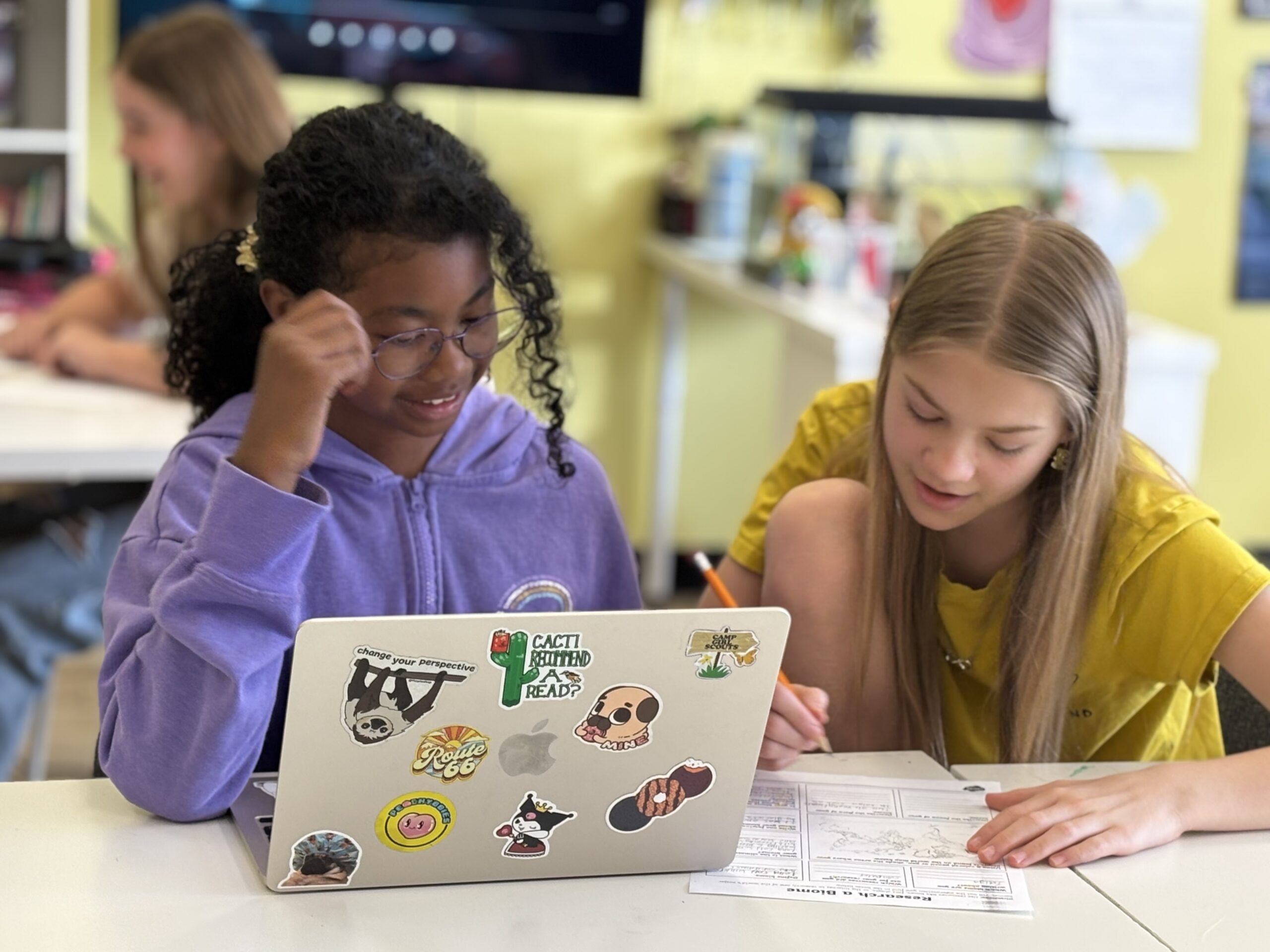
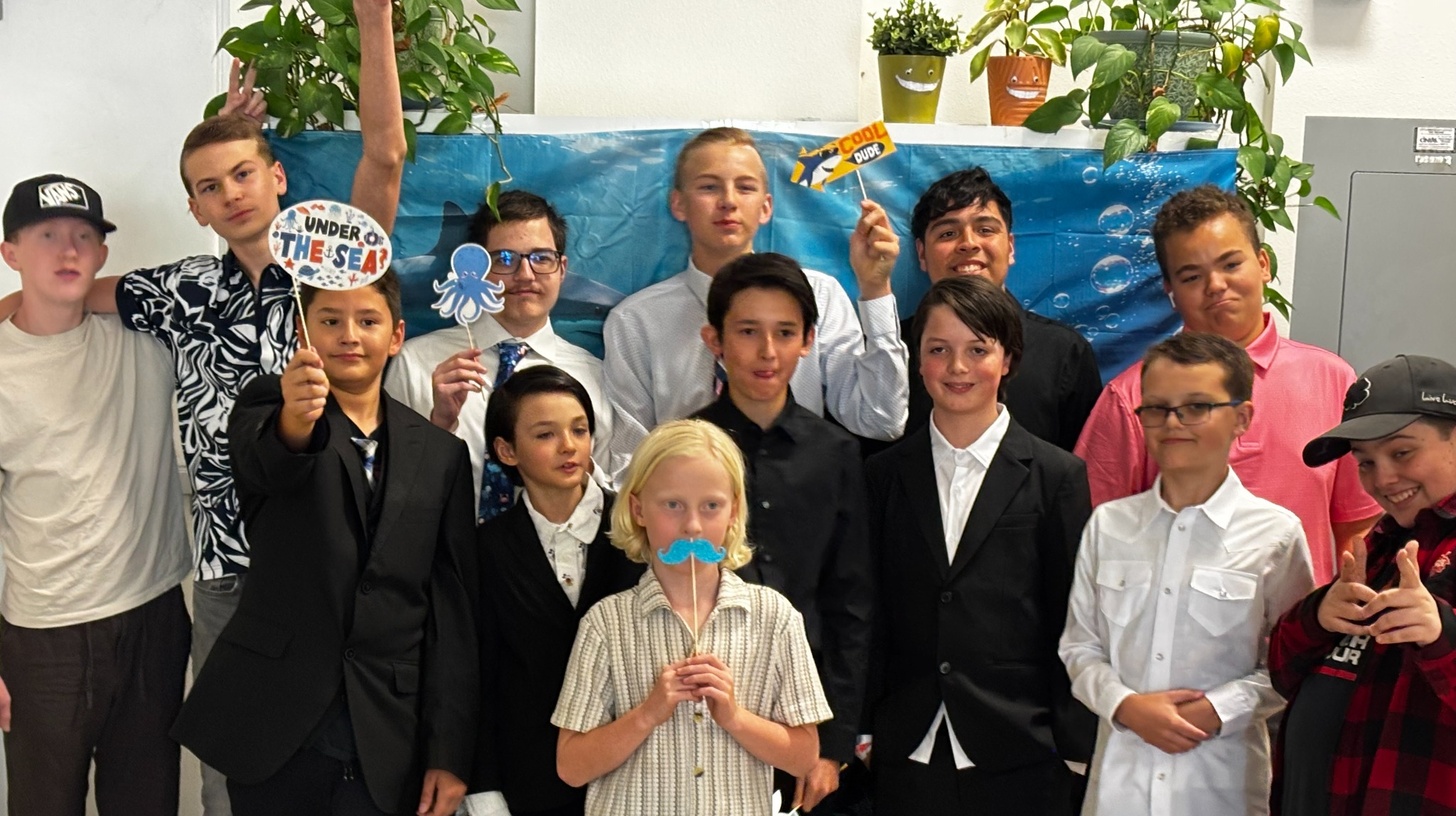
A microschool is a small learning community, often serving fewer than 25 children. No two are exactly alike, but most share a few features:
- Very small group sizes
- Personalized and often self-paced learning
- Multi-age groupings rather than fixed grades
- Flexible schedules
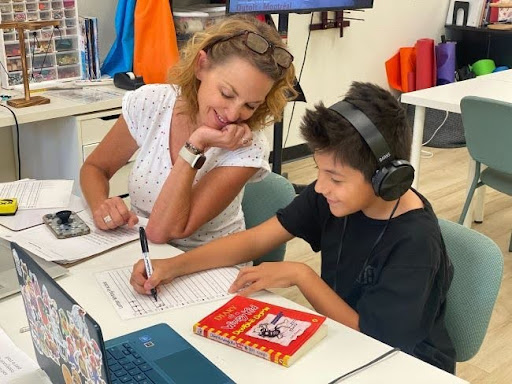
- A close relationship between the educator and each child
If you want a fuller picture of the model, our guide to what a microschool is walks through it in detail, and how microschools work covers what a typical day involves.
Educators in a microschool often describe themselves as guides or teachers rather than lecturers, working alongside small groups and tracking progress through portfolios, projects, and observation as much as through traditional grades.
(In many states, microschools are legally classified as private schools, homeschools, or charter partnerships. That label is about funding and recognition, not size or teaching approach.)
How microschools and private schools compare
Here is a side-by-side look at the attributes families ask about most.
| Attribute | Private school | Microschool |
| Typical size | Medium to large | Very small, often under 25 children |
| Class structure | Grade-level cohorts in traditional classrooms | Multi-age groupings, not always fixed by grade |
| Learning pace | Mostly grade-based and standardized | Flexible and individualized, often self-paced |
| Schedule | Fixed school day and school year | Structured but flexible; some run hybrid schedules |
| Teaching model | Credentialed teachers in classrooms | An educator or guide, with a smaller teacher-to-student ratio |
| Cost | Tuition required; national average around $15,000 a year | Tuition required; most charge $10,000 or less |
Most of the differences come down to scale and structure. The sections below add a little context to the rows families tend to weigh most.
Size and class structure
The clearest difference is scale. A microschool keeps the group small and often mixes ages, so a child might work alongside slightly older or younger peers, grouped by skill in a given subject rather than strictly by age.
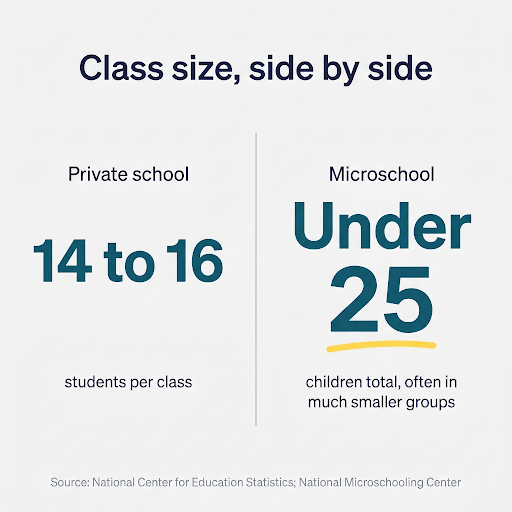
For some children, a larger, more structured environment is energizing. For others, a small group where the educator knows them well makes it easier to stay engaged. The right fit comes down to how your child does in a room full of people.
Learning pace
Private schools generally follow a grade-based, standardized pace. Microschools tend to be more individualized, letting children move faster or slower by subject and proficiency.
A self-paced setting can let a child move ahead in reading while taking more time in math, matching the work to where they actually are in each subject. Other children do better with a more standardized pace, where everyone moves through the same material together on a steady, predictable rhythm. The right pace depends on how your child learns, not on which model sounds better on paper.
Schedule and flexibility
Schedules differ too. Private schools run on a fixed school day and calendar. Microschools are often more flexible, and some operate on hybrid schedules of just two or three days on site.
For families, that flexibility can be a deciding factor, especially when it helps with travel, outside activities, or a child’s own energy levels. It has less to do with how a child learns and more with how a family’s week fits together.
Teachers and relationships
Private schools usually staff classrooms with a 14 to 16:1 teacher-to-student ratio. Microschools run smaller teacher-to-student ratios, which is part of why the relationship between educator and child tends to be closer.
Really, it comes down to how much individual attention your child needs to do their best work, and how much you value the structure a larger faculty can offer.
What each model costs
Both models charge tuition, and the cost ranges overlap considerably.
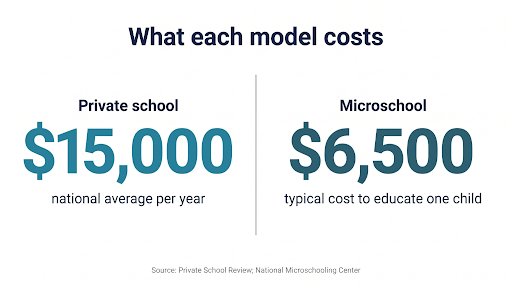
For private schools, the national average sits around $15,000 a year, according to Private School Review, though that average hides wide variation. Elementary tuition tends to run lower, high school higher, and costs differ sharply by state.
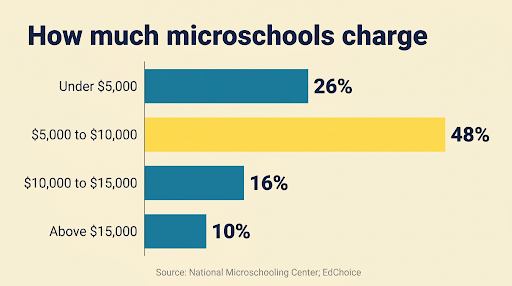
Microschools are usually less expensive. According to the National Microschooling Center, the typical cost to educate one child runs around $6,500, and most microschools charge $10,000 or less in tuition.
Questions to ask yourself about your child
A side-by-side comparison only goes so far. The more useful exercise is to think about your own child and what your family is looking for. A few questions worth sitting with:
- Does your child do best with a close, personal relationship with one teacher, or with finding their footing in a larger, more independent environment?
- Does your child learn best moving at their own pace, or with the structure of a grade-level curriculum?
- How much does schedule flexibility matter to your family?
- Are you looking for a school with established traditions, extracurriculars, and a recognized name, or a smaller community built around your child’s individual growth?
- Is your child engaged and challenged where they are now, or do you sense their current setting isn’t quite the right fit?
There are no right answers here, and many families consider both options before deciding. Neither model is the better choice for every child. Microschooling is one path among several worth exploring.
Finding a microschool near you
If a microschool sounds like it might fit your child, the best next step is to see what exists in your area. Every microschool is different, so visiting a few is the clearest way to tell whether the size, pace, and community feel right.
You can browse options on our microschool directory to find a school near you. Download the 2026 Family Guide to Microschools to get additional insights and recommendations about what to look for when you visit.