

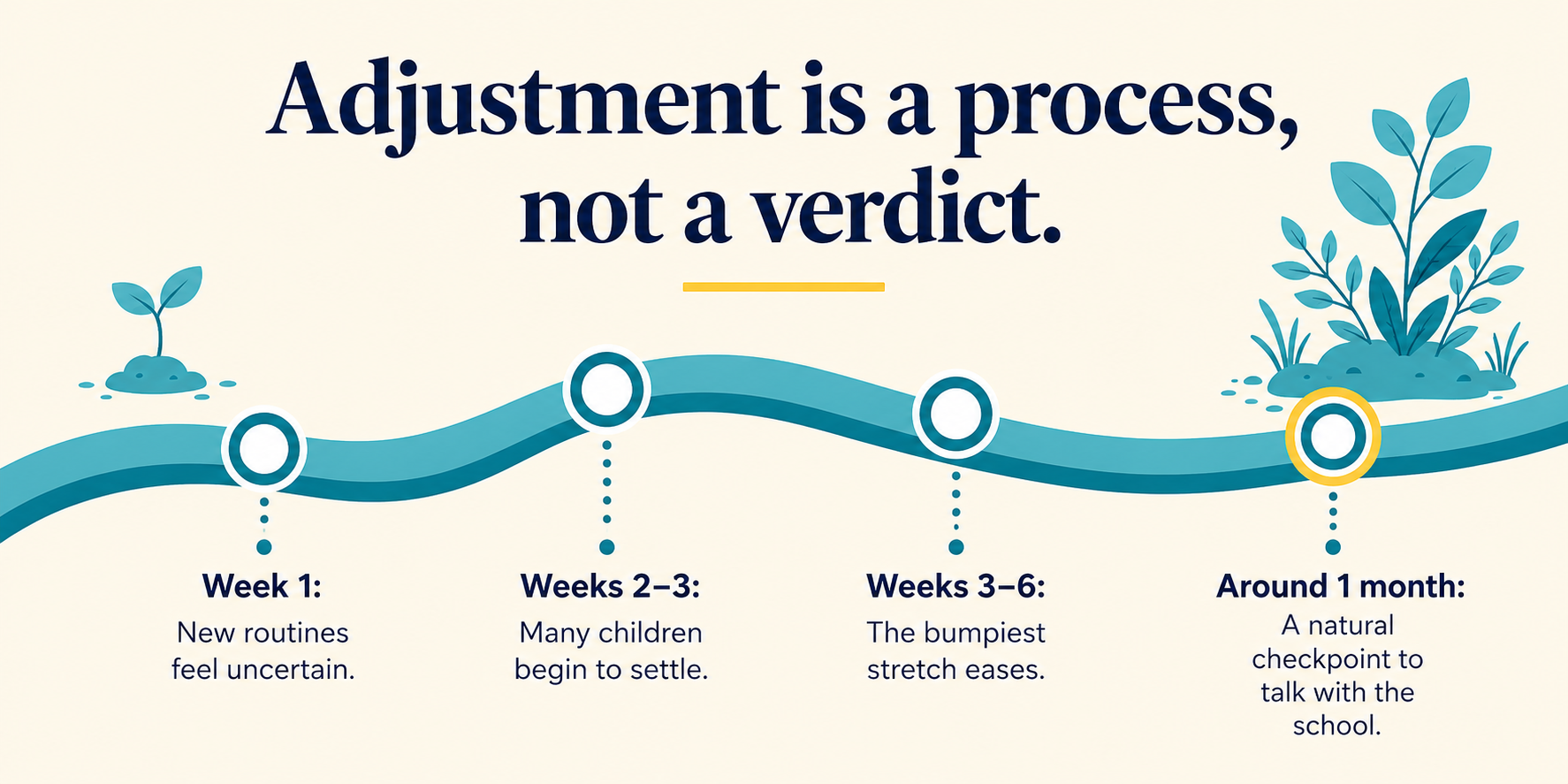
Helping your child adjust to a microschool is its own process, separate from the decision to enroll. A bumpy first few weeks does not mean you made the wrong choice. Most children move through the bumpiest part of the transition within the first three to six weeks, and clinical pediatric guidance often points to the first month as a natural checkpoint for re-evaluation. The work in the meantime is honest conversation, practical preparation, realistic expectations, and active partnership with the school.
At KaiPod Learning, we’ve supported families through this transition across 150+ partner microschools in 30+ states. One pattern holds consistently across that experience: a hard first few weeks is not evidence of a wrong decision. This guide covers how to talk with your child about the change, how to prepare in the weeks before the first day, what early signs of adjustment look like, and how to partner with the school when something feels off.
What This Guide Covers
A Bumpy First Few Weeks Doesn’t Mean You Made the Wrong Choice
This is the part many families don’t quite expect. You did the research and compared the options. You chose a microschool because something about the current setup wasn’t working, and something about this new path felt right. (If you’re still weighing that decision, our roadmap on reasons families consider switching schools walks through how to think it through.) Then the first day comes, your child seems quiet at pickup, and a small voice in your head starts asking if you got it wrong.
The research on school transitions is clear that adjusting to a new school is its own process, separate from the decision that led to it. One 2023 study found that children’s morning stress levels rose during the first two weeks at a new school, with the adjustment continuing over roughly two months. The Kids Mental Health Foundation, part of Nationwide Children’s Hospital, says most children settle into a new school year within two to three weeks.
In our experience supporting families through this transition, the first three to six weeks tend to be the bumpiest. That fits with what the research suggests, and it fits with what families tell us. A child who seems hesitant on day three may be telling stories about new friends by day twenty.
How to Talk to Your Child About the Change
Children pick up on family confidence. Pediatric researchers note that when adults are stressed, children can sense it even when the adults try to hide it. The most useful thing you can do in early conversations is be honest, age-appropriate, and steady.
Frame the conversation around what is staying the same as well as what is changing. The American Academy of Pediatrics recommends asking children what they are worried about and helping them problem-solve their own concerns, rather than promising those worries away. Validate the feelings as they come up.
Sample phrases when talking with your child
A few examples of language to use with younger children:
- “You’ll be learning in a smaller group.”
- “Your teacher will get to know you really well.”
- “Some things may feel different at first, and that’s okay.”
- “If something feels confusing, you can tell us, and we’ll figure it out together.”
Keep the framing positive without overpromising. Lines like “You’re going to love it” can backfire if the first week is hard. Aim for honesty rather than enthusiasm.
Talking with older children and siblings
Older children usually want to be part of the conversation, not just informed. Ask what they’re wondering about, what they want to know, and what they’re nervous about. They may bring up things you hadn’t considered, including questions about friends from the previous school, schedule changes, or how this affects family routines.
Siblings carry their own weight here, even when they aren’t the ones switching schools. Across the families we’ve supported, those who include siblings in age-appropriate ways tend to have an easier overall transition. A short explanation of the new routine, an invitation to ask questions, and a sense that the family is making this decision together usually goes a long way.

Practical Preparation Before the First Day
One of the best ways to make a school transition easier is to prepare in advance. Children feel calmer when they know what to expect, and families feel calmer when the first morning has fewer unknowns.
2 to 3 weeks before
- Confirm the schedule, daily routines, and drop-off and pickup plans
- Gather any required materials or supplies the school has asked for
1 week before
- Walk through what a typical day will look like, in plain language
- Practice the new routine, including the new wake-up time and the commute
- Answer last-minute questions honestly, even when the honest answer is “I don’t know yet, but we’ll find out.”
- If possible, arrange a meeting with another child who will be at the same school
Johns Hopkins Medicine recommends arranging play dates with familiar peers in the weeks before school starts to ease the transition back into school.
How to Tell Whether Your Child Is Adjusting
The first few weeks aren’t a verdict. They’re the start of a process, and the goal is steady adjustment, not instant success. What you’re looking for in those early weeks is movement in the right direction, not a finished result.
Early signs of adjustment
- Talking about school experiences at home, even briefly
- Engagement with the day, even if your child seems tired afterward
- Asking questions about the routine, the people, or the work
- Bringing home a name or two of new classmates
Signs of growing fit
- Rising confidence or curiosity over the course of a few weeks
- Strengthening relationships with peers and adults at the school
- Willingness to try new things they would have resisted before
- Less night-before anxiety than there was at the beginning
Signals worth a check-in
- Persistent stress or resistance that doesn’t soften
- Confusion about expectations the school hasn’t clarified
- Ongoing frustration without follow-up or support
- Concerns your child has raised that haven’t been addressed
If something on the third list keeps showing up past the first month, that’s a fair point to start a conversation with the teacher or school director. Pediatric guidance from sources like the Child Mind Institute recommends consulting a clinician if anxiety persists past four weeks.
Partnering With the School During the Transition
The most useful thing families can do during the early weeks is start with conversation, not conclusions. Microschools are built around small group sizes and close relationships, which means the people working with your child can usually answer specific questions quickly and adjust quickly when something isn’t working.
A few practices that tend to help during the first month:
- Set up a check-in cadence early on. Many families find a weekly or biweekly conversation useful for the first few weeks.
- Share context about your child that will shape their experience, including what worked and what didn’t at the previous school.
- Ask for specific observations rather than general updates. “How is she doing with the math work?” gets more useful information than “How’s she doing?”
- Treat adjustments as part of how the model is supposed to work. Microschools are designed to adapt to what each child needs, and that responsiveness is most useful when families and educators are talking honestly about what they’re seeing.
In a microschool, you have direct access to the educator who knows your child best, which makes regular and more informal communication possible.
Trust the Process, and Give It Time
A good microschool fit doesn’t always feel obvious right away. You made this decision carefully, and it’s normal for the transition to take time. Early bumps don’t necessarily mean you made the wrong choice.
Many KaiPod network schools include a 30-day adjustment period built into the enrollment process. The first month is treated as a real settling-in window, giving time for families to see how the experience is unfolding and to talk honestly with the school about what’s working and what isn’t. Adjustment takes time, and families need room to evaluate without pressure.
If you’d like a fuller picture of what to expect during the transition, the 2026 Family Guide to Microschools walks through preparation, the first 30 days, and how to evaluate whether a microschool is the right fit for your child. For broader context on how microschools are structured day to day, you can also read our overview of how microschools work.